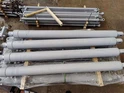

When we use products such as electrical appliances or machinery every day, there are usually instructions reminding us to read the instructions before use, that is, some conditions to avoid failure are not sufficient. In other words, when you are using it, you must protect the product from artificial damage. Let's talk about some non-sufficient conditions for hydraulic cylinders to avoid their failure. A brief description is as follows:
1. The hardness of the sealing part of the hydraulic cylinder is selected from 92 degrees to 97 degrees. The higher the pressure of the hydraulic cylinder, the harder the sealing part is selected.
2. The linear velocity of the lip of the sealing part must meet O.5 m/s.
3. The temperature resistance of the sealing parts must meet the temperature of -30 ℃ ~ 110 ℃. Because the temperature of the lip contact surface of the seal is higher than the temperature of the hydraulic oil, the selection of the seal must be resistant to a high temperature of 110°C; and the temperature in some places is around -30°C, so the choice of the seal must be resistant to a low temperature of -30°C.
4. If you want to choose a special seal, such as a shaft seal, you can only choose a shaft-specific seal. Piston seals can only choose piston-specific seals, but not dual-purpose seals for shaft and piston. Because the bottom width of the dual-purpose seal is smaller than the bottom width of the special seal. The deformation of the bottom of the dual-purpose seal is large when the hydraulic cylinder is under high pressure, and the bottom of the special seal is wider under the same pressure, and the compression deformation is small, and the possibility of being squeezed out by the piston rod becomes smaller. Gaskets should be added to the bottom of the hydraulic cylinder seals. Why add a gasket, what is the hardness of the gasket? Since the pressure of the oil hydraulic cylinder is above 25Mpa, the height of the seal determines the deformation of the bottom of the seal, that is, the size of the extrusion gap, because the gasket also has hardness and deformation. Adding the gasket is equivalent to reducing the deformation of the seal. When the hydraulic cylinder makes the seal under high pressure, the bottom of the hydraulic cylinder reduces the possibility of friction with the piston rod or the inner wall of the hydraulic cylinder, thereby reducing the root of the seal being squeezed out and strained. chance of damage. The relationship between gasket hardness and pressure is that the greater the pressure, the greater the hardness.
The above conditions are what we must pay attention to when using hydraulic cylinders.
May 14, 2023
Several Necessary Conditions To Avoid Hydraulic Cylinder Failure
Send Inquiry