


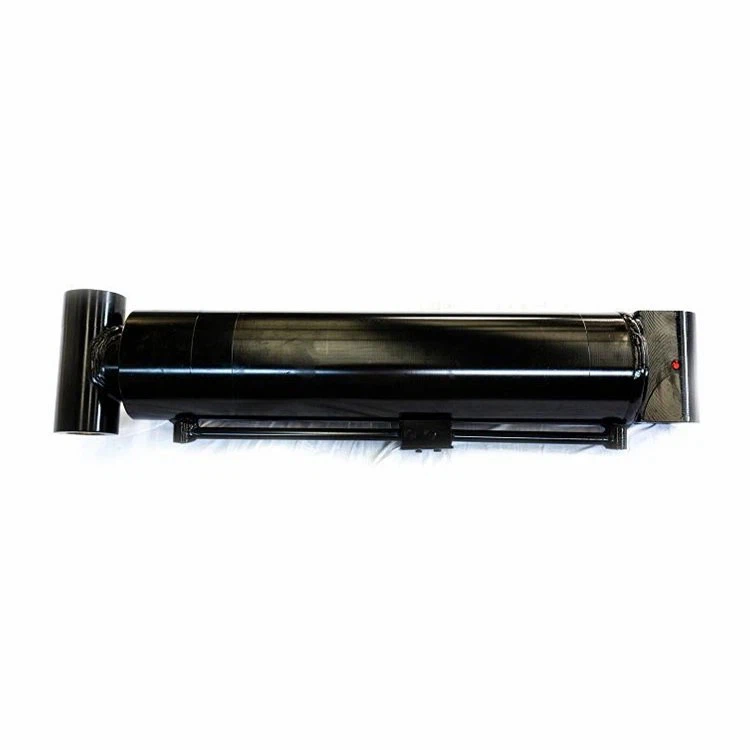
Shandong Taiyuanhao Hydraulic Technology Co., Ltd. is located in Yishui County, an old revolutionary area, with profound cultural heritage, superior geographical location and very convenient transportation. The company was established in 1985. Since its establishment, it has been committed to R&D and production of a complete set of hydraulic cylinders for truck cranes, hydraulic cylinders for special vehicles, a complete set of pump truck (boom and pumping) cylinder series, truck-mounted crane cylinders, sanitation truck cylinders, aerial work vehicles, oil cylinders, forklift oil cylinders, large special high-pressure oil cylinders and other products. The company took the lead in passing the ISO9001:2008 quality management system certification in the industry. Now it covers an area of more than 50 acres and has fixed assets of 100 million yuan. At present, the product technology is at the leading level in China, and the products meet the needs of our customers.Recognition and praise of medium-sized enterprises. Products all over the country more than 30 provinces, municipalities and autonomous regions.
Product application
There are more than 100 product varieties, covering most types of construction machinery. In the future, according to the improvement of the company's research and development capabilities, more products will be involved in more fields.
Our service
With "customer satisfaction" as our corporate orientation, we listen to our customers' goals and wishes and provide customized solutions.
Our certificate
Iso9001 quality system, high-tech enterprise, specialized new enterprise in shandong province more than 10 patents.
Production market
The main supporting enterprises are liugong group, hunan pengxiang xingtong automobile co., ltd., jining stone construction machinery co., ltd.

Single Acting Hydraulic Cylinder
Hydraulic cylinders are mechanical actuators that convert hydraulic pressure into linear force and motion. They are commonly used in various industries, such as manufacturing, construction, and automotive, to perform different tasks, such as lifting heavy loads, pushing or pulling heavy machinery, and controlling the movement of equipment.

Tractor Loader Hydraulic Cylinders
Tractor loader hydraulic cylinders are hydraulic cylinders that are used in conjunction with a tractor loader attachment to lift and move heavy objects. Tractor loaders are commonly used in agricultural, construction, and industrial applications to move materials such as dirt, gravel, and hay bales.

Farm hydraulic cylinders are devices used in agricultural equipment for a variety of purposes, including lifting, pushing, and pulling heavy loads. They are typically made of steel and consist of a cylinder, piston, and hydraulic fluid. When hydraulic pressure is applied to the cylinder, the piston moves, which in turn moves whatever is attached to the cylinder.

Long Stroke Hydraulic Cylinder
A long-stroke hydraulic cylinder is a type of hydraulic cylinder that is designed to provide a longer stroke length than standard hydraulic cylinders. The stroke length refers to the distance that the piston rod can move in the cylinder.

Wood Splitter Hydraulic Cylinder
A wood splitter hydraulic cylinder is a type of hydraulic cylinder used in wood splitting machines to generate the force needed to split wood logs. The cylinder works by converting hydraulic fluid pressure into linear force, which pushes a splitting wedge through the wood log.

A marine hydraulic cylinder is a device used on ships and other marine vessels to provide powerful linear motion and force using pressurized hydraulic fluid. These cylinders are used in a variety of applications, including steering systems, winches, cranes, hatch covers, and other heavy-duty equipment.

A snow plow hydraulic cylinder is a component of a snow plow that is used to control the movement of the plow blade. It is typically a hydraulic piston and cylinder assembly that is powered by a hydraulic pump. The cylinder is responsible for pushing and pulling the plow blade, and the hydraulic pump provides the pressure necessary to move the cylinder.

Three Stage Hydraulic Cylinder
Hydraulic cylinders are commonly used in a wide range of industrial and mobile applications, providing linear force and motion in a variety of mechanical systems. Among the many types of hydraulic cylinders available, one popular design is the three-stage hydraulic cylinder.
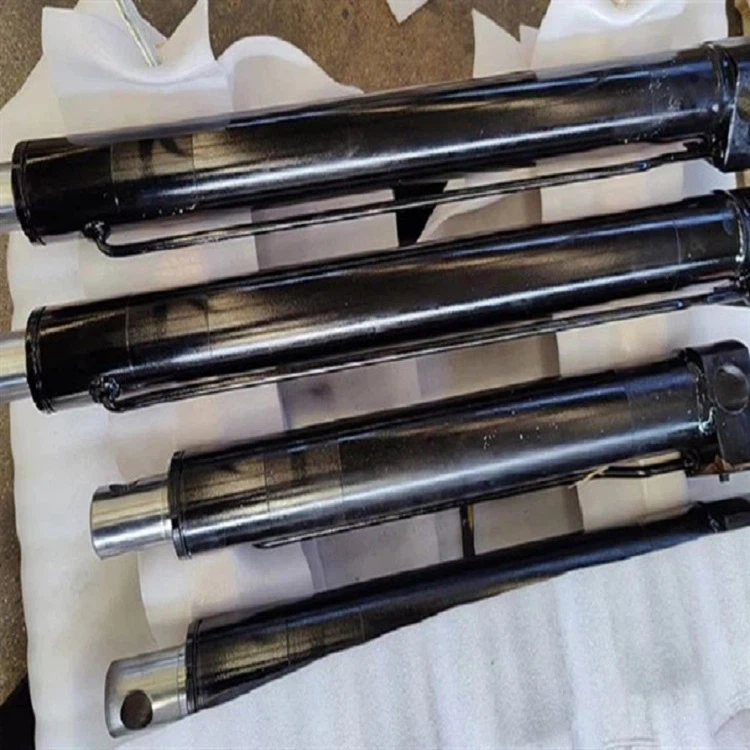
Hydraulic Cylinders for Farm Equipment
Hydraulic cylinders for farm equipment are designed to provide mechanical force and motion to various farming machinery and implements. They are used in a variety of applications, such as lifting, pushing, pulling, or tilting. The main concept behind hydraulic cylinders is to convert fluid power into mechanical force to perform various tasks in farming.
Farm implement hydraulic cylinders are used in various farming equipment, such as tractors, plows, harvesters, and sprayers. These cylinders are designed to convert hydraulic power into mechanical power to operate the farm equipment.This particular hydraulic cylinder is used in a hay baler to compress hay into bales. The cylinder is connected to a hydraulic system that provides the pressure needed to compress the hay.Here's some information about the performance, specification, composition, function, principle, and application of a farm implement hydraulic cylinder.
Benefits of Farm Implement Hydraulic Cylinders
Farm Implement Hydraulic Cylinders Take Less Space
One of the main benefits is the fact that these cylinders can be used effectively in small, compact spaces. If your operations are confined and require compact equipment, consider a Farm Implement hydraulic cylinder that can extend significantly longer than the collapsed length. This is the most logical option if you have limited mounting space and require a long stroke.
Farm Implement Cylinders Can Meet Specific Angle Requirements
Using this cylinder variety is the most practical in vehicles that feature a hydraulic-powered bed such as a dump truck. There are specific angles that are required to gradually release the materials at the required range, requiring a 60-degree angle to empty the contents of the bed. As well as raising the bed, telescoping cylinders are beneficial in collapsing and returning the bed to a horizontal position.
Can be Made as a Constant Thrust / Constant Speed Application
Special Farm Implement cylinders are known as constant-thrust/constant-speed cylinders. They are configured so that all moving stages extend simultaneously to provide a constant speed and force while it is extending or retracting. This variety of Farm Implement hydraulic cylinders is often used to drive drill heads in underground mining where performance parameters are necessary. Due to its more complicated design, this type of hydraulic cylinder accomplished the necessary action by internally trapping oil, limiting the number of moving stages, and matching retract and extend areas.
Can be Made as a Double or Single Acting
Another noteworthy advantage is that Farm Implement hydraulic cylinders can be made as single-acting, double acting, or a combination of the two. If you opt for the combination of single-acting and double-acting Farm Implement cylinders, you'll also receive the benefits of a double-acting cylinder combined with the ease of operation and cost-effectiveness of a single-acting hydraulic cylinder.
Types of Farm Implement Hydraulic Cylinders
Single Acting Cylinders
In a single acting hydraulic cylinder piston force is applied in a single direction. The working stroke is pushed outward as the cylinder contracts at the head end-hence the alternative name of 'push cylinder'. As the force flows only one way the return stroke is dependent on an internal spring mechanism around the piston shaft, or an external motor.
Double Acting Cylinder
Double acting hydraulic cylinders can exert force in two directions. The piston cylinder is divided into two pressurised chambers that enable the rod to achieve both outward and return strokes under its own power. Mechanical energy is transferred to the piston surface through a special type of hydraulic fluid.
Tandem Hydraulic Cylinders
Tandem hydraulic cylinders are two separate cylinder barrels, connected by a single rod linked to a piston head in each barrel. When the first cylinder is pressurised, the rod enters the base end of the attached cylinder and pushes the piston surface, amplifying and transmitting the force. Using tandem cylinders allows amplification of the force available from small cylinders. It also conserves energy within a system as outward pushing force is only required in the first cylinder. Most tandem cylinders are of the double acting type, with the return stroke made possible by pressurising the piston end chamber of the outermost attached cylinder. Sometimes three or more cylinders can be connected in tandem stages.
Telescopic/Multistage/Ram type/Actuating Hydraulic Cylinders
Telescopic cylinders are a number of individual cylinders nested together in order of decreasing size. Anything up to six stages are common. The cylinder barrel itself acts as the piston rod, transferring force to the next cylinder in a similar way to a tandem cylinder. Telescopic cylinders are widely used in long reach equipment, such as crane lifts and digger arms. Most telescopic hydraulic cylinders are single acting, utilising a spring mechanism for the return stroke.
Application of Farm Implement Hydraulic Cylinders
Food industry
If your business falls in the food industry, you might need a hydraulic pump to power your equipment. You need the cylinder to power forklifts to transport raw materials and end products from one place to another.some conveyor systems source power from farm implement hydraulic cylinders to process, package, and position food products. However, you need to use a powerful hydraulic cylinder, and thus you should work closely with a professional to help you choose the right one.hydraulic motors provide consistent torque for critical equipment in the food and beverage preparation processing procedures, such as shaping, cutting, separating, ingredients transfer, mixing, and dicing.
Construction projects
A construction site is usually full of different tools and equipment that use hydraulic systems. For instance, a hydraulic cylinder is used to power forklifts, bulldozers, and loaders to lift and push loads.excavators also use farm implement hydraulic cylinders to control the movement of the bucket and boom. This equipment uses hydraulic fluid and motors to move the cylinder accordingly. Therefore, if your construction company offers excavation services, you need equipment with a powerful and reliable hydraulic cylinder.
Metal fabrication
Hydraulic presses that contain farm implement hydraulic cylinders are useful in the metal fabrication industry. The cylinders exert force on metal to cut, bend, drill, or assemble pieces. Examples of hydraulic-powered machines in metalworking are grinders, lathes, honing machines, planers, gears, and broaches.since metal fabrication involves creating complex structures, you need robust farm implement hydraulic cylinders to facilitate the processes.
Agricultural processes
In the agriculture sector, machines powered by hydraulic cylinders are used extensively. Examples are tractors, loaders, spraying equipment, skid steers, baler, and heavy machines for planting, weeding, and harvesting.you need these hydraulic-powered machines for agricultural applications whether you plant crops or rear livestock. Farm implement hydraulic cylinders are also used in attachments of some equipment such as wood splitters.
Farm Implement Hydraulic Cylinders Components
Cylinder Barrel
The cylinder barrel is mostly a seamless thick-walled forged pipe that must be machined internally. The cylinder barrel is ground and/or honed internally.
Cylinder Bottom or Cap
In most hydraulic cylinders, the barrel and the bottom are welded together; this can damage the inside of the barrel if done poorly. Therefore, some hydraulic cylinder designs have a screwed or flanged connection from the cylinder end cap to the barrel. In this type the cylinder barrel can be disassembled and repaired in future.
Cylinder Head
The cylinder head is sometimes connected to the barrel with a sort of a simple lock (for simple cylinders). In general however, the connection is screwed or flanged. Flange connections are the best, but also the most expensive. A flange has to be welded to the pipe before machining. The advantage is that the connection is bolted and always simple to remove. For larger hydraulic cylinder sizes, the disconnection of a screw with a diameter of 300 to 600 mm is a huge problem as well as the alignment during mounting.
Piston
The piston is a short, cylinder-shaped metal component that separates the two sides of the cylinder barrel internally. The piston is usually machined with grooves to fit elastomeric or metal seals. These seals are often O-rings, U-cups or cast iron rings. They prevent the pressurised hydraulic oil from passing by the piston to the chamber on the opposite side. This difference in pressure between the two sides of the piston causes the cylinder to extend and retract. Piston seals vary in design and material according to the pressure and temperature requirements that the hydraulic cylinder will see in service. Generally speaking, elastomeric seals, made from nitrile rubber or other materials, are best in lower temperature environments while seals made of viton are better for higher temperatures. The best seals for high temperature are cast iron piston rings.
Rod Gland
The piston rod is usually a piece of hard, chrome-plated, cold-rolled steel that is attached to the piston and extends from the cylinder to the rod end. In a double-rod-end hydraulic cylinder, the actuator has a rod that extends from each side of the piston to each end of the cylinder barrel. The piston rod connects the hydraulic actuator to the machine part that performs the work. This connection can be in the form of machine threads or mounting accessories, such as rod clamps or rod eyes. These mounting accessories can be threaded or welded to the piston rod, and sometimes, they are machined parts of the rod end.
How to Choose Farm Implement Hydraulic Cylinders
Mass of a Hydraulic Cylinder
The first step is to determine the mass you need to move. Once you know the weight of the mass, you can assess the force required to move it. For example, lifting a load straight up requires a force equal to its weight, but moving a load on the ground necessitates overcoming both friction and acceleration. It's also advisable to consider a force that is 120% greater than the calculated requirement for added safety.
Geometry Involved
Next, examine the geometry involved in moving the mass. For machines like a hydraulic press, which moves up and down, the geometry is straightforward and requires no further adjustments.However, when the center of the load being moved is offset from the lifting point and perpendicular to it, the force required by the cylinder changes. For instance, in a crane, the cylinder pushes on the boom, which is often positioned far from the load. Typically, the distance from the load to the fulcrum can be ten times the lift force or more. Thus, the closer the lift point is to the fulcrum, the more force the cylinder needs to lift the load.
Bore Size
The next step is to determine the bore size for the cylinder. The force generated by the cylinder is the product of the system pressure and the area of the internal piston surface that the pressure acts upon. This formula is used to calculate the necessary bore size to achieve the desired force.The bore size will also be influenced by the maximum pressure range of the application. Pressures can vary significantly depending on the specific task of the system. Cylinders are available for test pressure and nominal standard pressure, accommodating different requirements. The system pressure should never exceed the cylinder's nominal rated design pressure.
Rod Size
The next step in selecting a hydraulic cylinder is to determine the appropriate rod size. Most standard cylinders offer either one or two rod options. Selecting the right rod size requires careful consideration of the necessary stroke length, which affects the rod's buckling strength. Additionally, bearing loads on the rod are an important factor in cylinder selection. An increase in stroke length will also increase the bearing loads on the piston rod.
Step 1: Disassembly
The repair process starts with a methodical disassembly of each cylinder - no matter how large or small. Berendsen's repair divisions maintain heavy overhead cranes and large and powerful disassembly rigs and benches enabling our facilities to handle large cylinders with ease.The disassembly procedure should be highly practiced. Cylinders should be correctly prepared and secured. High-quality equipment is necessary not only to cope with large cylinders but also to ensure the disassembly process is controlled. Damage during disassembly should be avoided. Not only does it increase the cost of repair, it makes it harder to diagnose the actual cause of hydraulic cylinder failure. Making it more difficult to distinguish between damage caused during disassembly and damage as a result of normal operation.
Step 2: Inspection & evaluation
Every cylinder is treated the way a forensic scientist would conduct an investigation. An experienced technician examines the failed cylinder for clues such as fractured, glazed or swelling seals, scored or asymmetrically worn piston rods, ballooned barrel tubes or cracked welds.Referencing manufacturers information and drawing on years of experience, the technician also measures each component with highly accurate digital and manual devices to assess cylinder condition including bore, piston, gland and rod wear, crack detection, chrome hardness and thickness, and surface finish. Each part is checked to confirm that it is within spec for tolerances.
Step 3: Reassembly
Experienced technicians make use of the cranes and benches to
reassemble each reconditioned cylinder. The same rigorous procedures and high-quality equipment is employed in reassembly to ensure correct installation of parts that must fit together very tightly. It is important to avoid damage or incorrect installation at this point, as this would severely impede performance and lead to rapid wear and failure. Berendsen's technicians assemble thousands of cylinders every year and follow strict assembly procedures. Maintaining cleanliness levels to prevent internal contamination, following correct assembly taking care not to damage or incorrectly install sensitive components such as seals and glands.
Step 4: Painting & finishing
Once assembled and given the OK after testing, the last step in the process is to give the newly restored a fresh coat in our in-house paint shops. With a protective layer of hard-wearing industrial paint, the outside now matches the inside, signalling that the cylinder has completed its journey. It has gone from a cylinder that has seen better days to one that has many more years of life left to give.
How to Maintain Farm Implement Hydraulic Cylinders
Regular Inspection
Routine inspections are the cornerstone of effective hydraulic cylinder maintenance. Schedule regular checks to assess for any signs of wear, leakage, or damage. Pay close attention to seals, rods, and mounting hardware. Early detection of issues can prevent costly downtime and extensive repairs down the line.
Fluid Analysis and Replacement
Hydraulic fluid is the lifeblood of your system, providing lubrication and transferring power. Regularly analyze the fluid for contaminants, moisture, and degradation. Replace the fluid according to manufacturer recommendations to maintain optimal performance and prevent corrosion or component wear.
Seal Maintenance and Replacement
Seals play a crucial role in preventing fluid leakage and maintaining system integrity. Inspect seals regularly for signs of wear, cracks, or deterioration. Replace worn seals promptly to prevent fluid loss, contamination, and potential damage to other components.
Proper Cylinder Alignment and Mounting
Correct cylinder alignment and mounting are essential for smooth operation and longevity. Ensure that cylinders are properly aligned with the load and mounted securely to prevent excessive stress, misalignment, or premature wear. Follow manufacturer guidelines for installation and alignment procedures.
Factory Pictures


Certificate


FAQ
Hot Tags: farm implement hydraulic cylinders, China farm implement hydraulic cylinders manufacturers, suppliers, factory, Steering Cylinder, Double Acting Hydraulic Cylinder, Two Way Hydraulic Cylinder, Tie Rod Hydraulic Cylinder, Farm Hydraulic Cylinders, Single Acting Hydraulic Cylinder


